
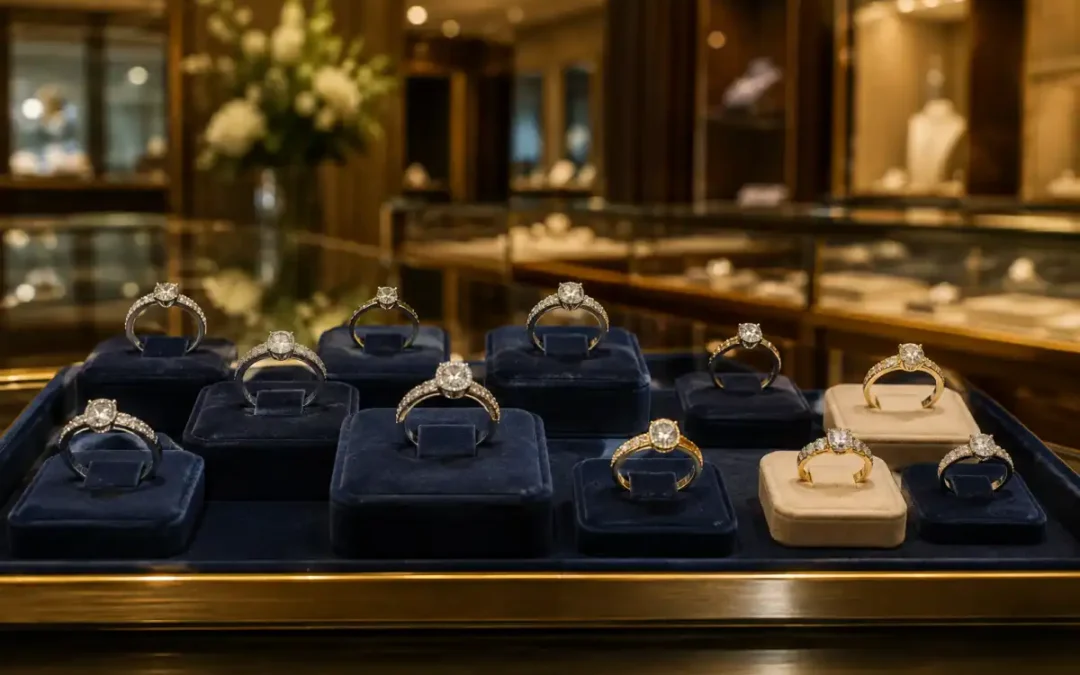
The two months’ salary rule has been around so long that most people assume it came from somewhere official. It didn’t. It came from a De Beers marketing campaign in the 1980s designed to sell more diamonds. There is no rule, no standard, and no amount that is objectively correct for an engagement ring.
What there is: a set of real factors that determine what a ring costs, and a practical way to think about budget that has nothing to do with how many paychecks you earn. Here’s how to approach it.
What Actually Drives Engagement Ring Prices
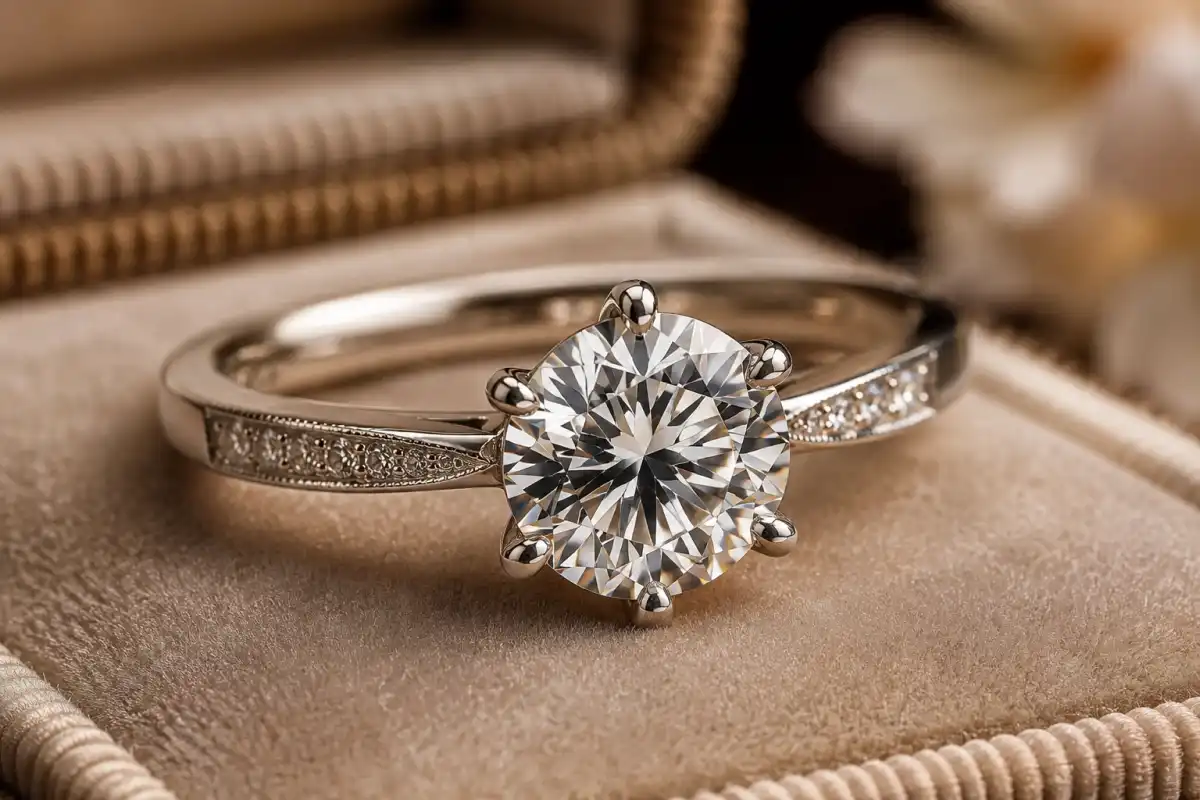
Four things determine what an engagement ring costs: the center stone, the metal, the setting complexity, and where you buy it.
The center stone: This is usually the biggest cost driver. A diamond’s price is set by its carat weight, cut quality, color grade, and clarity grade. A 1-carat round brilliant in a G-color, VS2-clarity grade will cost more than a 0.75-carat stone in the same quality range, but not in a linear way. Prices jump at whole and half carat weights because demand clusters there.
Natural vs. lab-grown: This is the most significant lever available to buyers right now. A lab-grown diamond with the same grade as a natural stone typically costs 50 to 80 percent less. A natural 1-carat F-VS1 round might retail for $6,000 to $8,000. The same specs in a lab-grown stone might run $1,400 to $2,000. That’s not a difference in quality. It’s a difference in origin.
Metal type: Platinum costs more than gold because it’s denser and more durable. 14k white gold is the most common and least expensive option. 18k gold costs a bit more. Platinum typically adds $300 to $800 or more to the ring cost depending on the setting weight.
Setting complexity: A simple four-prong solitaire is the least expensive setting style. Halo settings, pavé bands, side stone settings, and anything requiring more metal and labor will add to the total. Some custom settings cost $500 to $1,500 in labor alone before the center stone is factored in.
What Rings Actually Cost in Victoria, TX
Without setting a specific budget ceiling, here’s a rough breakdown of what’s available at different price points at a local jeweler in South Texas.
Under $1,500: You’re looking at smaller center stones (under 0.5 carats in natural, or 0.75 to 1 carat in lab-grown), simpler settings, and 14k gold. Plenty of beautiful options exist in this range.
$1,500 to $3,500: The widest selection. Natural diamonds in the 0.5 to 0.75 carat range, or lab-grown stones up to 1.5 carats, with a range of setting styles. This covers the majority of engagement ring purchases in the Victoria area.
$3,500 to $7,000: Natural 1-carat-and-up diamonds with good grades, or larger lab-grown stones in premium settings. Custom work becomes more accessible at this level.
Above $7,000: Fine jewelry territory. Larger natural diamonds with premium cut grades, designer settings, or fully custom pieces from scratch.
How to Set a Budget That Actually Works
Start with what you can comfortably spend without taking on significant debt. Debt doesn’t make the ring more meaningful. Then decide whether natural or lab-grown matters to you, because that choice alone shifts your budget’s buying power dramatically.
If budget is a consideration, financing options at Regal Jewelers include lease-to-own programs that let you bring home the ring without paying the full amount upfront. Understanding how those terms work before you shop is worth five minutes of reading.
One practical approach: tell the jeweler your ceiling, not your target. If you say ‘I want to spend about $3,000,’ a good jeweler shows you what $3,000 buys. If you say ‘I don’t want to go above $3,500,’ you’ll see options up to that number, and you might find something for $2,200 that’s exactly right.
What She Actually Cares About (Usually)
Most surveys of engagement ring recipients consistently show that the style of the ring matters more than the size of the stone. A ring she loves wearing every day is worth more than a ring that sits in a drawer because it’s too flashy or doesn’t match her taste.
If you’re not sure of her style, a custom design consultation can help you build something that reflects exactly what she’d choose herself. Custom doesn’t have to mean complicated or expensive, and it means the ring exists nowhere else in the world.