
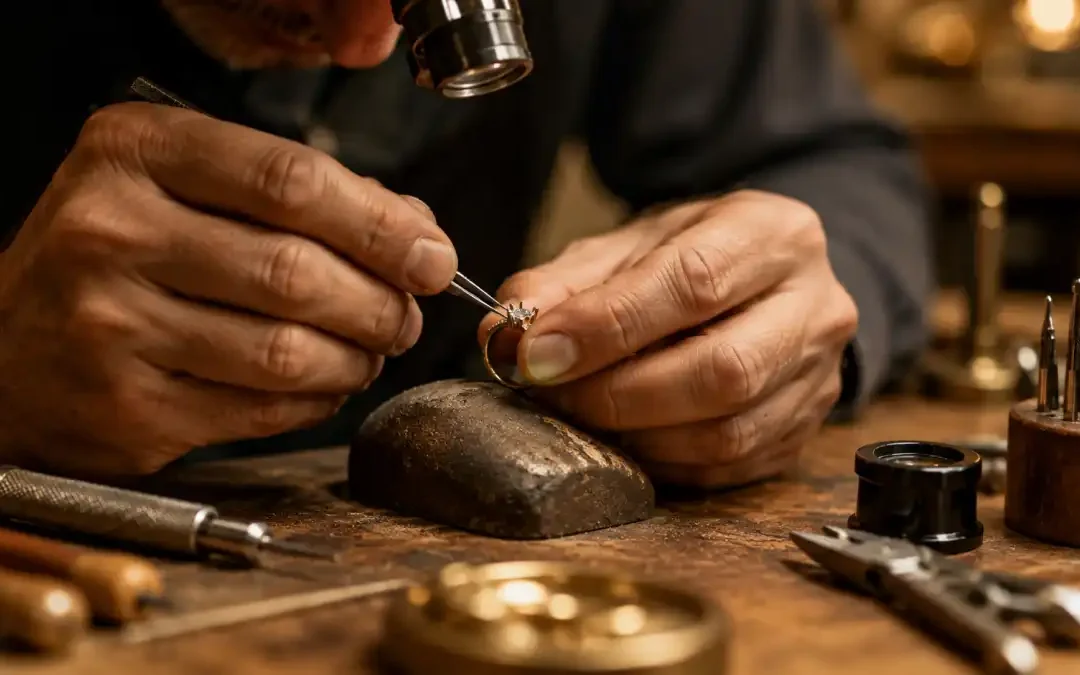
A broken clasp. A stone that fell out. A ring that stopped fitting years ago and has lived in a drawer ever since. Most jewelry problems are fixable, and most people are surprised by how straightforward the repairs are.
Here’s what the most common jewelry repairs at Regal Jewelers in Victoria, TX actually involve, what they cost, and the honest answer about when repair doesn’t make financial or practical sense.
The Most Common Jewelry Repairs
Ring resizing: A ring that’s too tight or too loose. Sizing a ring down requires cutting and removing metal, then closing the shank. Sizing up requires adding metal, either stretching or inserting a section. Most rings can be sized up or down by about two full sizes. Rings with channel-set stones around the entire band, tension settings, or certain eternity bands have limited sizing options because of how the stones are set.
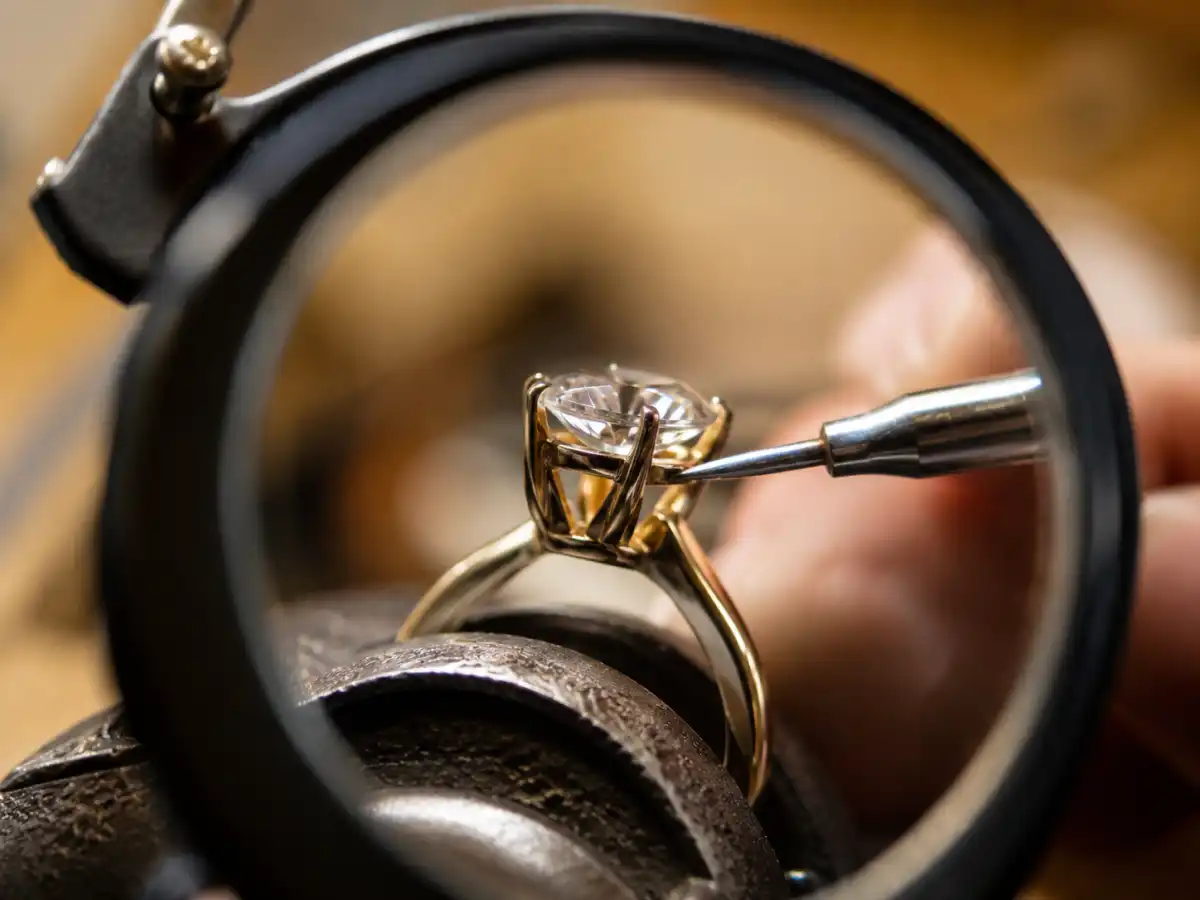
Prong repair: Prongs hold stones in place. They wear down, bend, or break over years of daily wear. A worn prong that catches fabric or scratches skin is a sign that a stone is at risk of falling out. Prong retipping rebuilds the worn tip; prong rebuilding replaces the whole prong. This is one of the more common repairs and one of the most worth doing, since losing a center stone is significantly more expensive than maintaining the setting.
Stone replacement: Stones fall out for two reasons: worn prongs that weren’t caught in time, or impact damage. Replacing a stone requires sourcing one that matches the original in size, shape, and quality. For accent stones and side diamonds, this is usually straightforward. For unusual cuts or colored stones, matching can take longer.
Clasp and chain repair: Lobster clasps, spring-ring clasps, and box clasps all fail eventually. Chain links break. Jump rings crack. These are quick repairs that typically cost $20 to $60 depending on the metal and complexity. A broken chain can often be soldered in under an hour.
Rhodium plating: White gold is naturally a warm, slightly yellow color. Rhodium plating gives it the bright white finish most people expect. That plating wears off over time, typically within 12 to 18 months of daily wear, revealing a warmer tone underneath. Re-plating restores the finish. Most rings need it every one to two years.
Engraving: Adding a date, initials, or message to the interior or exterior of a ring. Laser engraving allows for precise detail. Machine engraving is less precise but sufficient for standard text. If you’re considering engraving on a piece that hasn’t been engraved before, it doesn’t affect wearability or structural integrity.
What Repairs Actually Cost in Victoria, TX
Rough pricing at a local jeweler in the Victoria area:
Ring resizing: $40 to $120 depending on the metal, the number of sizes, and whether the band has stones. Platinum sizing costs more than gold because of the material and the technical demands of working with platinum.
Prong retipping: $25 to $60 per prong, depending on metal type. Full prong replacement runs higher. A four-prong solitaire getting all prongs retipped typically falls in the $80 to $150 range.
Clasp and chain repair: $20 to $80 for most common repairs. A broken chain in yellow gold is on the lower end. A platinum chain with a custom clasp is higher.
Rhodium plating: $50 to $100 for a ring. The piece is cleaned, polished, and plated in a single session that typically takes a day or two.
When Repair Doesn’t Make Sense
Some pieces aren’t worth the cost to repair. The honest answer depends on two things: the monetary value of the piece and its sentimental value.
If a repair costs more than the piece is worth to replace, that’s worth knowing before you commit. A costume jewelry necklace with a broken clasp might cost $45 to fix and $30 to replace. A fine gold chain with a broken link costs $50 to fix and $400 to replace. The math is different.
Sentimental value changes the equation entirely. If the piece can’t be replaced regardless of cost, repair makes sense even when it’s expensive. An inherited diamond that needs a new setting, a wedding ring that needs the prongs rebuilt, a family heirloom bracelet with a broken clasp. These are worth fixing.
For pieces where you’re not sure whether repair or replacement makes more sense, our team at Regal Jewelers will give you an honest assessment. You can also browse our full services page to see everything we handle in-house.
What to Expect When You Bring In a Repair
Most repairs start with a free assessment. The jeweler examines the piece, identifies what needs to be done, and gives you a price before any work begins. You can approve, decline, or ask questions before committing.
Turnaround time varies by repair complexity. Simple clasp fixes or chain repairs often come back the same day or next day. Resizing and prong work typically takes three to seven business days. Complex work or pieces requiring special-order parts takes longer. When you bring in a piece, ask for a timeline so you know what to expect. For repairs on engagement rings and fine jewelry, we’ll keep you updated if anything changes during the process.