
Most people who’ve never commissioned custom jewelry assume it’s more complicated than it is. Or they assume it costs far more than buying something off a display case. Neither is always true.
The custom jewelry design process at Regal Jewelers in Victoria, TX follows a clear path from your first conversation to the moment you hold the finished piece. Here’s exactly what that looks like.
Step 1: The Initial Consultation
The process starts with a conversation, not a commitment. You bring your ideas, whether that’s a photo you saved, a vague description, a stone you already own, or a ring you want redesigned. You don’t need to arrive with a finished concept. The jeweler’s job at this stage is to ask questions and help you articulate what you actually want.
Common things covered in a first consultation: the metal type (yellow gold, white gold, rose gold, platinum), the type and size of center stone if applicable, the style of the setting, your timeline, and your budget. Budget matters because it shapes what’s possible. Being upfront about what you want to spend helps the jeweler steer you toward options that are actually feasible rather than building something that ends up over budget at delivery.
Most first consultations take 30 to 60 minutes. You leave with a rough direction, not a finished design.
Step 2: Design and Rendering
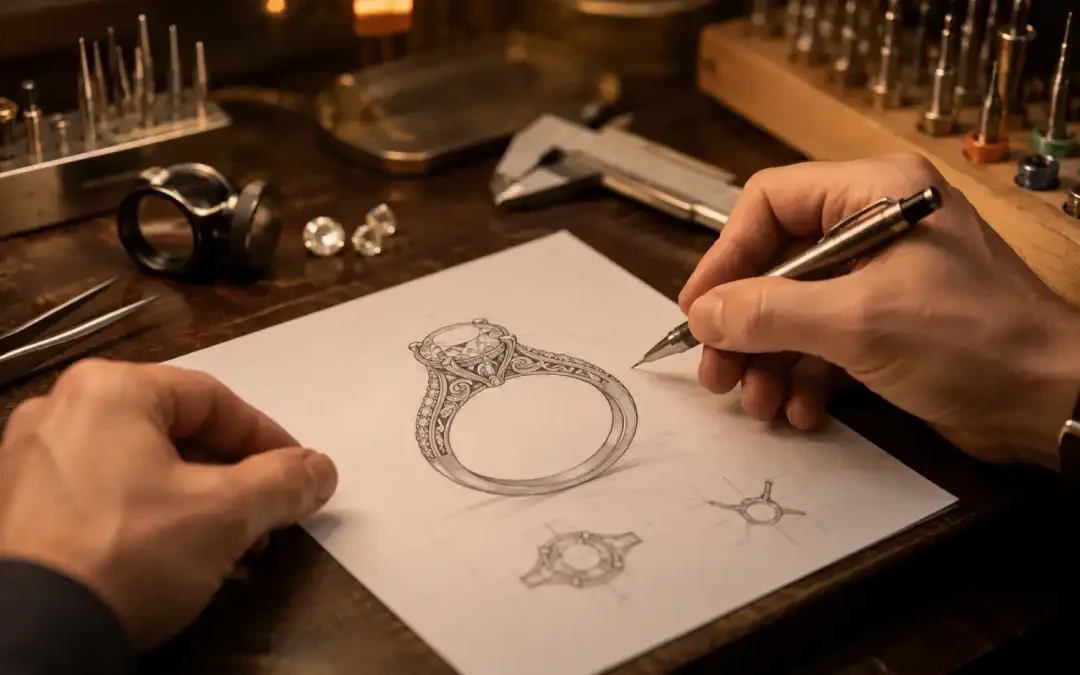
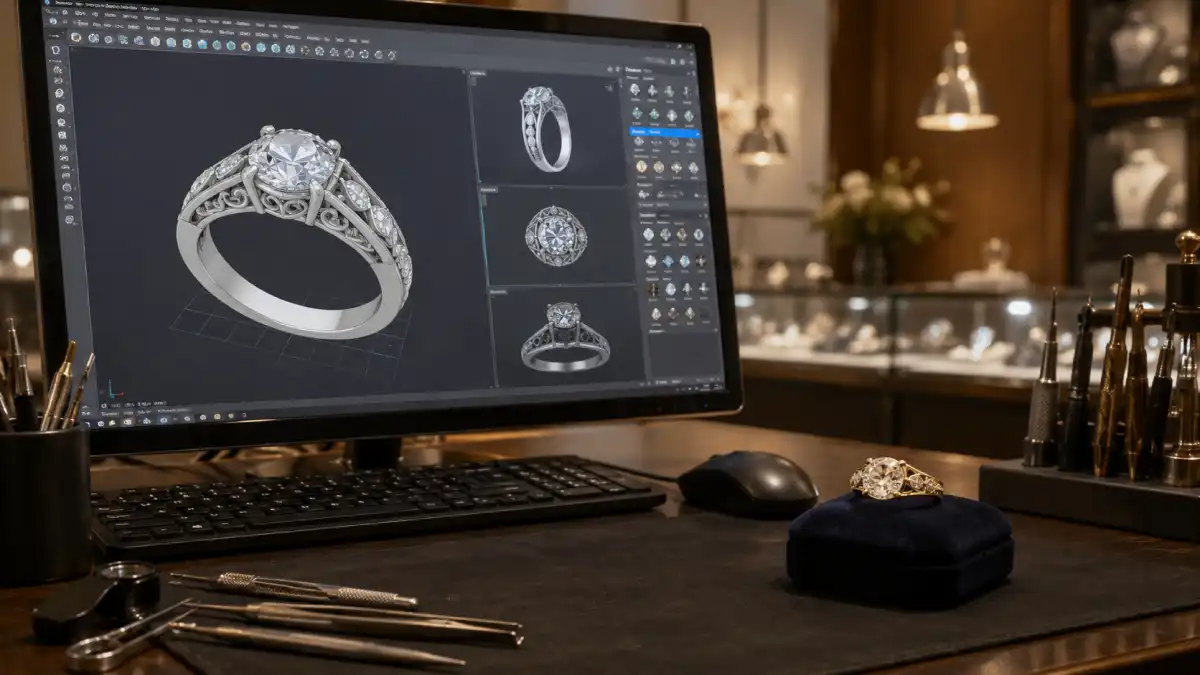
After the consultation, the jeweler creates a design. Depending on the complexity, this might be a hand sketch, a computer-aided design (CAD) rendering, or both. CAD renderings give you a photorealistic 3D view of the piece before any metal gets poured, which is useful for catching anything that isn’t quite right.
At this stage, you review the design and give feedback. Want the band thinner? A different prong style? More side stones or fewer? This is the time to make those changes. Revisions at the rendering stage cost nothing compared to revisions after casting.
Once you approve the design, you typically pay a deposit before production begins.
Step 3: Stone Selection
If your piece involves a diamond or gemstone, stone selection usually happens after the design is approved but before casting begins. Your jeweler presents options in the appropriate size, shape, and quality range for your budget. At Regal Jewelers, both natural and lab-grown diamonds are available for custom work, so you can choose based on your priorities around cost and origin.
For buyers working with a specific stone, such as a family heirloom diamond being reset into a new setting, the stone is measured and factored into the design before the rendering is finalized.
Step 4: Casting and Setting
Once the design is approved and the stone is selected, the piece goes into production. The metal is cast in the agreed-upon alloy, cleaned, and then sent to the bench for setting and finishing. Setting is the most skill-dependent part of the process. Prongs that aren’t seated correctly, bezels that aren’t tight, or pavé stones that aren’t level affect both the look and the security of the piece.
This phase is where timelines vary most. A simpler solitaire ring might be ready in two to three weeks. A complex multi-stone piece or something requiring custom metalwork could take six to eight weeks. If you’re working toward a specific date, such as an anniversary, birthday, or proposal, give your timeline early in the first conversation.
Step 5: Final Review and Delivery
Before the piece is delivered, a final quality check covers the metal finish, stone security, sizing accuracy, and overall appearance. At Regal Jewelers, you review the piece in person before taking it home. If anything isn’t right, it gets corrected before you leave.
For buyers who want to see what completed custom work looks like before committing, our custom jewelry gallery includes examples of past pieces across different styles, metals, and stone types.
What Custom Jewelry Costs in Victoria, TX
Custom doesn’t automatically mean expensive. Simple pieces, a solitaire engagement ring with a basic setting, a custom band, a pendant with a single stone, can cost roughly the same as comparable ready-made pieces. The premium for custom work is in labor and design time.
More complex designs with intricate metalwork, multiple stones, or unusual settings cost more. The design consultation is typically free. A deposit is collected before production begins and applied toward the final price.