
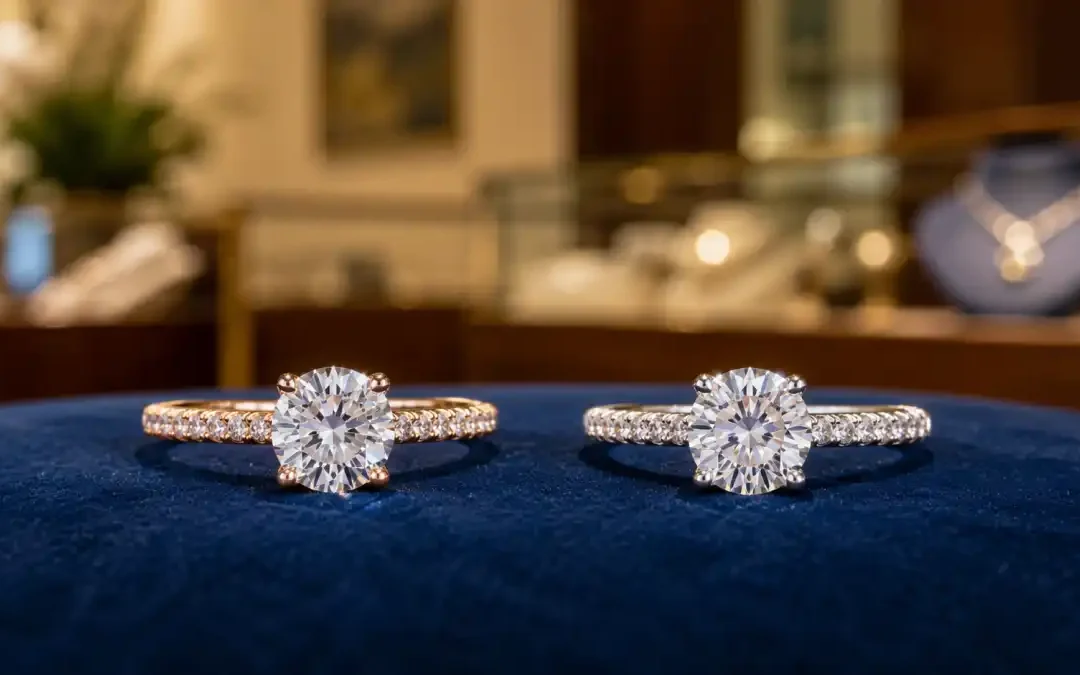
A lab-grown diamond and a natural diamond sitting side by side look exactly the same. A gemologist with a loupe can’t tell them apart. A standard diamond tester won’t either. The differences are real, but they’re not about what you can see in the ring on your finger.
Before you decide, it helps to understand what you’re actually comparing. Here’s what separates lab-grown and natural diamonds on the factors that actually matter: composition, cost, origin, and long-term value.
They’re Both Real Diamonds
This is the starting point that trips up a lot of buyers. Lab-grown diamonds are not simulants. They’re not cubic zirconia or moissanite. They’re made of carbon atoms arranged in the same crystal structure as a mined diamond. They have the same hardness (10 on the Mohs scale), the same refractive index, and the same thermal conductivity.
The Federal Trade Commission updated its guidelines in 2018 to confirm that lab-grown diamonds meet the definition of a diamond. Both types are graded using the same 4 Cs: cut, color, clarity, and carat. A 1-carat, F-color, VS1-clarity lab-grown diamond and a 1-carat, F-color, VS1-clarity natural diamond are optically and physically identical.
Where They Actually Differ
Origin: Natural diamonds formed underground over billions of years under extreme heat and pressure. Lab-grown diamonds are produced in controlled environments using either High Pressure High Temperature (HPHT) or Chemical Vapor Deposition (CVD) processes. The result is the same crystal structure through two very different paths.
Price: This is the biggest practical difference. Lab-grown diamonds now typically cost 50 to 80 percent less than comparable natural diamonds. A natural 1-carat round brilliant in the F-G color range with VS clarity might retail for $5,000 to $8,000. A lab-grown stone with identical specs might run $1,200 to $2,000. That price gap has widened significantly over the last five years.
Resale value: Natural diamonds have historically held value better than lab-grown stones over time. Lab-grown diamond prices have dropped substantially as production has scaled, which means older lab-grown purchases may not resell well. Natural diamonds aren’t a great investment either, but they depreciate more slowly. If resale value matters to you, it’s a factor worth weighing.
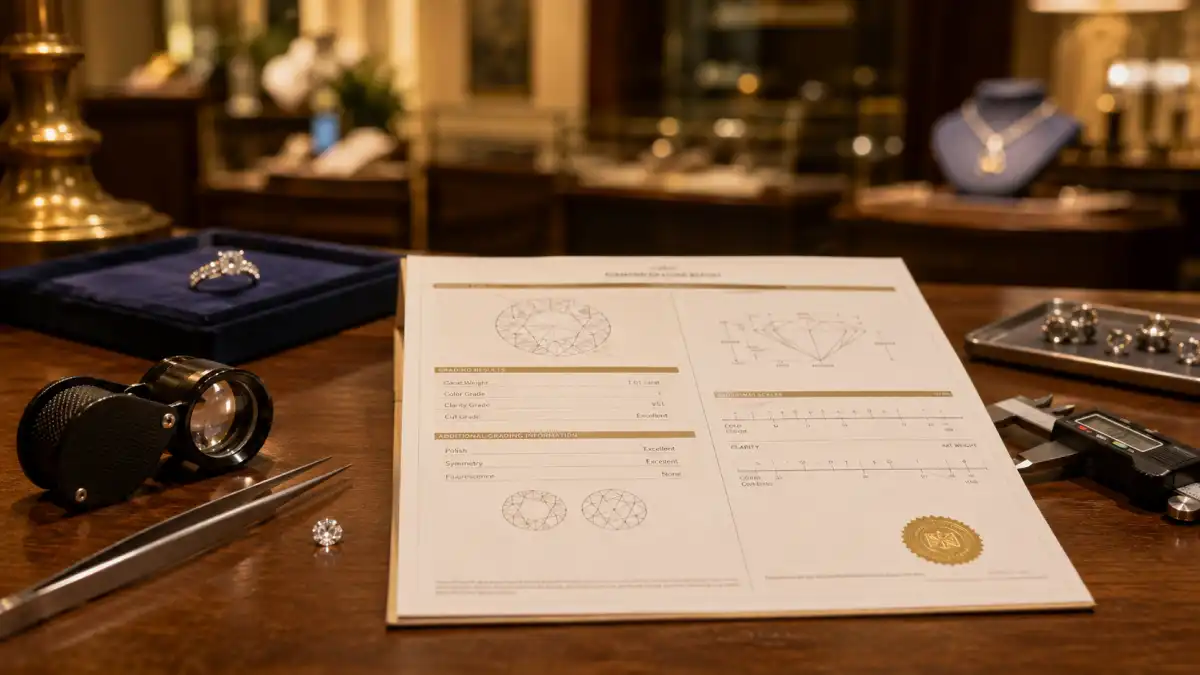
Certification: Both types can and should come with grading reports from recognized labs. GIA, IGI, and GCAL all grade lab-grown diamonds. IGI has become particularly common for lab-grown certifications. When shopping, ask for the grading report regardless of which type you’re buying.
Who Lab-Grown Diamonds Are Right For
Lab-grown diamonds make the most sense for buyers who want the largest, highest-quality stone their budget can buy and aren’t concerned about resale value or the geological provenance of the stone. If you’re spending $3,000 and want the best diamond that $3,000 can get, lab-grown will consistently get you a bigger, higher-quality stone than natural.
They’re also worth considering if you want a specific look, like a sizable center stone in a custom setting, and the origin of the diamond doesn’t factor into the meaning of the piece for you.
Who Natural Diamonds Are Right For
Natural diamonds are the right choice for buyers who place value on rarity and geological age, who have longer-term resale considerations, or for whom the natural origin matters emotionally or symbolically. Some buyers simply want a stone that formed over billions of years. That’s a legitimate reason, and no lab process can replicate it.
Natural diamonds also hold their value more predictably in secondary markets, which matters for pieces that might be handed down or eventually resold.
What to Ask at the Jeweler
When you’re shopping at Regal Jewelers in Victoria, TX, here are the questions worth asking regardless of which type you’re considering: What’s the grading certificate, and who issued it? What is the specific color and clarity grade? For lab-grown, what production method was used? And for any stone, what does the return or exchange policy look like?
Neither choice is objectively better. The right answer depends on what you’re prioritizing. Both types are sold at Regal Jewelers, and we’re happy to show you options side by side so you can make the comparison yourself.